 University of North Texas

Who We Are
Since its founding in 1890, the University of North Texas has advanced education as a catalyst for individual and societal transformation. For more than 130 years, the College of Education has prepared educators, counselors, and leaders who improve learning, strengthen communities, and expand opportunity. Through nine bachelor's degrees, 18 master's programs, and 14 doctoral concentrations, the college delivers rigorous preparation grounded in practice, research, and civic responsibility.
The College of Education is also home to several nationally respected clinics and centers, including the Center for Young Children, the Center for Play Therapy, the Counseling and Human Development Center, and the Office of Research Consulting, which provide critical services to UNT and the broader North Texas community while serving as high-impact training and research environments for students and faculty.
The college's impact is nationally recognized, including a No. 8 ranking for Online Master's in Education Programs by U.S. News & World Report. Each year, more than $415,000 in scholarships fuels access, persistence, and leadership, amplifying the college's reach and lasting influence.
Our Strategic Goals (2026–2030)

Develop strong, relevant academic programs and our workforce
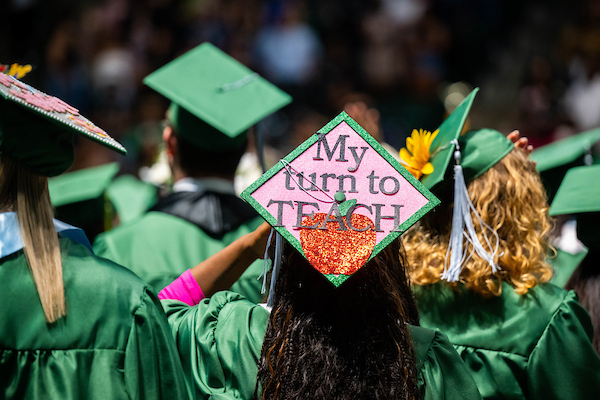
Advance new knowledge, research connections, and scholar development
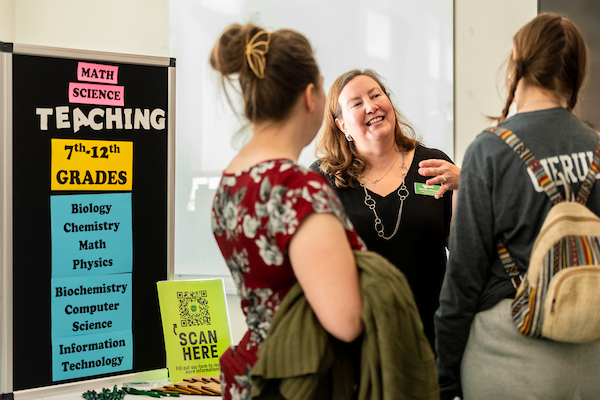
Drive meaningful external partnerships
Our Implementation Priorities
-
Implement the college reorganization and align curricula: COE will fully implement its new departmental structure, aligning curricula, certificates, and cross-listed courses with workforce trends. This includes a college-wide review of field placements, internships, and dissertations for alignment with contemporary professional and scholarly goals, and structured onboarding and mentoring pathways for faculty and staff across departments.
-
Strengthen student retention and graduation outcomes: COE will use retention and progression data to identify barriers, strengthen proactive advising and early outreach, and expand student mentoring and engagement initiatives. The goal is to improve first- to second-year retention beyond 75.4% and increase the four-year graduation rate toward 70% by 2030.
-
Expand research capacity and interdisciplinary collaboration: The Applied Innovation and Research in Education Initiative (AIRE) will serve as COE's hub for community-engaged research across teacher preparation, counseling, and educational psychology. A new pre-award grant development specialist will support funding submissions and interdisciplinary collaborations, while student engagement in applied research and COE Research Day will expand.
-
Engage alumni and students in external partnerships: COE will map and prioritize partnerships across school districts, nonprofits, clinical practices, and community organizations, integrating students and alumni into partnership activities. The college will develop protocols to maintain and evaluate partnerships over time, expanding professional development opportunities and strengthening the workforce pipeline for COE graduates.
Core Metrics
UNT Baseline (2024/25): 77% | UNT Target (2030): 90%
COE Baseline (2024/25): 76.4% | COE Target (2030): 90%
College contribution to achieving targets:
- COE will strengthen proactive advising, improve communication about academic pathways and support services, and use retention data to identify barriers and guide targeted interventions.
UNT Baseline (2024/25): 42% | UNT Target (2030): 65%
COE Baseline (2024/25): 52.5% | COE Target (2030): 70%
College contribution to achieving targets:
- COE will increase collaboration among academic departments, advising, and Educator Preparation, and implement targeted intervention and engagement strategies to increase the four-year graduation rate from 52.5% toward 70%.
UNT Baseline (2024/25): 61% | UNT Target (2030): 80%
COE Baseline (2024/25): 59.2% | COE Target (2030): 80%
College contribution to achieving targets:
- COE will expand accessible delivery models, revise curricula for efficiency, and scale programs in high-shortage certification areas to reduce time to degree completion and improve six-year outcomes.
UNT Baseline (2024/25): $124M | UNT Target (2030): $250M
COE Baseline (2024/25): $2.9M | COE Target (2030): $4.8M
College contribution to achieving targets:
- COE will create a pre-award grant development specialist to increase external funding submissions and align research priorities with pressing challenges in teaching, leadership, counseling, and human development.
UNT Baseline (2024/25): 286 | UNT Target (2030): 300
COE Baseline (2024/25): 42 | COE Target (2030): 52
College contribution to achieving targets:
- COE will expand doctoral student research engagement through the AIRE initiative, interdisciplinary research hubs, and strategic local and national partnerships that support applied scholarship and completion.
UNT Baseline (2024/25): 6 years | UNT Target (2030): Decrease time for programs over
median
COE Baseline (2024/25): 7 years (median) | COE Target (2030): 6 years
College contribution to achieving targets:
- COE will expand accessible delivery models, including flexible and online options, and align program structures with documented workforce demand to improve time to degree.
Emergent Metrics
Important Dimensions of Our Success that Require New Approaches
Percentage of graduates placed in high-demand occupations or graduate and professional programs
While some departments collect limited information, it is not aggregated at the college level. A new college-level alumni engagement and recruiter position will begin collecting and coordinating this data in the next academic year.
Percentage of academic programs that integrate internships, industry-sponsored projects, or other work-integrated learning experiences
Career-aligned learning is a core component of COE's curriculum: 100% of undergraduate majors incorporate structured residency, clinical, or field-based experiences, and 80% of graduate programs (12 of 15) embed internships, practicums, residencies, or comparable applied learning opportunities. These experiences connect theory to practice and strengthen professional competencies.
Prestigious awards, exhibitions, and performances achieved by our students, faculty, staff, and alumni
Individual units track accomplishments informally and formally through the Faculty Information System. COE is building coordinated reporting structures to capture achievements college-wide, including broadening college-level awards to align with Look North and expanding recognition in areas that drive innovation and community impact.
New ventures, startups, and public impact projects launched by students, faculty, and alumni
The college currently has limited centralized data on new ventures, startups, or public-impact projects. With the reorganization creating an Associate Dean of Research and Community Engagement, COE will begin systematically tracking and coordinating this information starting in the next academic year.
Perceptions of how well UNT prepares graduates to pursue lives of meaning and purpose
COE strengthens student and alumni engagement through coordinated efforts between the new college-level alumni engagement and recruiter position and the Student Advising Office. Signature events such as the STAR Celebration bring together alumni, donors, and students to support meaningful connections and gather feedback on graduates' preparation.
College Level Metrics
- Faculty and staff engagement/climate: COE will assess satisfaction, morale, and organizational climate through surveys including Gallup and COACHE. Strong engagement supports retention, collaboration, and overall institutional effectiveness.
- Faculty research productivity: The college will measure publications, citations, and grants, while broadening recognition to include faculty innovators, entrepreneurs, and those making direct community impact alongside traditional scholarly output.
- Faculty retention and turnover rates: COE will begin formally monitoring retention and turnover, using exit survey data from the Vice Provost for Faculty Success to understand departure trends and inform recruitment and retention strategies.
- Policy responsiveness and engagement capacity: COE will track policy briefings to faculty and staff, timely curriculum adjustments in response to regulatory changes, participation in state and national professional associations, and compliance timelines tied to accreditation and state requirements.
- Strategic partnership effectiveness: The college will implement a centralized tracking system to monitor active partnerships, clinical placement capacity by certification area, district satisfaction ratings, partnership renewal rates, and graduate employment within partner systems.