 University of North Texas

Who We Are
Located at Denton's Discovery Park, the UNT College of Engineering features a high-density ecosystem designed for rapid cross-disciplinary breakthroughs. This collaborative environment prepares career-ready students to meet critical industry needs while advancing strategic research in applied artificial intelligence, advanced manufacturing and materials, healthcare innovations, and autonomous systems.
Serving over 6,500 students, the college offers a comprehensive selection of five doctoral, 11 master's, and 12 bachelor's programs. Spanning a diverse spectrum of technology and innovation, from computer science to biomedical, computer, construction, electrical, materials, and mechanical engineering, these fields are laser-focused on preparing graduates to compete effectively in today's global market.
Our Strategic Goals (2026–2030)

Expand high-impact experiential learning for every student

Modernize curriculum and expand flexible degree pathways

Strengthen faculty research productivity and capacity

Expand industry and national lab partnerships
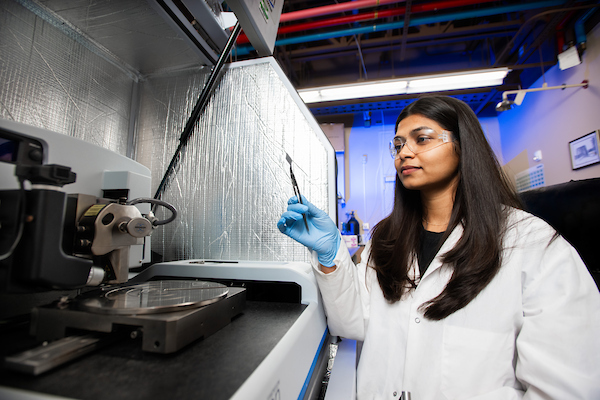
Strengthen visibility through community and alumni engagement
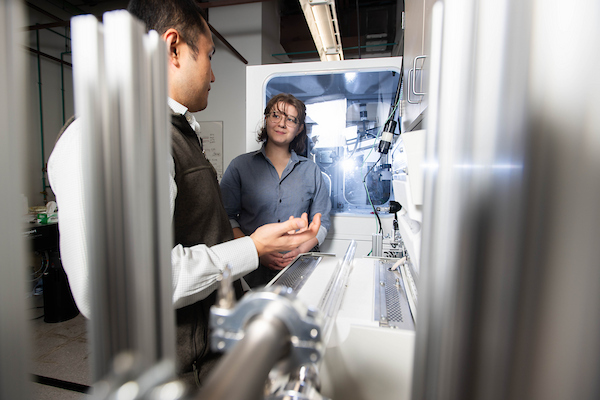
Strengthen student retention through mentoring and support
Our Implementation Priorities
-
Expand experiential learning opportunities: CENG will establish a committee to integrate experiential learning into program structures, evaluate corporate partners for support, and pilot the approach in select programs. The college will also develop a tracking system for student placements, create templates for integrated micro-design projects, and provide instructor training to support implementation.
-
Modernize curriculum for flexibility and career readiness: CENG will begin converting high-priority graduate courses to online and hybrid formats aligned with workforce needs, review undergraduate curricula to streamline credit hours and prerequisite chains into stackable knowledge units, and assess opportunities for greater elective flexibility and interdisciplinary pathways across undergraduate and master's programs.
-
Strengthen faculty research capacity: CENG will pursue cluster faculty hires to expand strategic research areas, engage outside support to help faculty pursue Department of Defense funding opportunities, expand seed funding initiatives to grow research collaborations, and draw on the college's centers and institutes to identify new opportunities for research productivity.
-
Expand industry and national lab partnerships: CENG will establish the UNT Engineering Industry Research Fellowship to launch new industry-sponsored research projects, create an innovation and commercialization council with industry professionals from targeted technology areas, and host a research showcase at Discovery Park to catalyze new research collaborations with regional and national partners.
-
Strengthen visibility through marketing and alumni engagement: CENG will launch a new college-wide summer camp experience, pilot an international undergraduate summer camp with UNT International Affairs, establish a college alumni board focused on alumni engagement and student mentorship, and expand marketing efforts to raise awareness of the college's academic programs.
-
Expand student mentoring and support: CENG will form a task force to assess current mentoring activities and retention practices, launch an advancement effort to grow philanthropic support for scholarships and research experiences, partner with the LEEF Teaching Hub on faculty development workshops for student mentoring, and establish a staff council to support cross-training and professional development.
Core Metrics
UNT Baseline (2024/25): 77% | UNT Target (2030): 90%
CENG Baseline (2024/25): 76.4% | CENG Target (2030): 90%
College contribution to achieving targets:
- CENG will strengthen retention through expanded peer and STEM Smart mentoring, new scholarships, early intervention efforts, and engaging learning environments designed to support students from their first year onward.
UNT Baseline (2024/25): 42% | UNT Target (2030): 65%
CENG Baseline (2024/25): 25.4% | CENG Target (2030): 65%
College contribution to achieving targets:
- CENG will improve time to degree through modernized curriculum pathways, reduced prerequisite barriers, greater elective flexibility, and integrated advising and mentoring that help students stay on track toward graduation.
UNT Baseline (2024/25): 61% | UNT Target (2030): 80%
CENG Baseline (2024/25): 51.8% | CENG Target (2030): 80%
College contribution to achieving targets:
- CENG will support sustained progress to completion through expanded mentoring, scholarships, and academic support, alongside curricular changes that reduce barriers and build clearer pathways for students at every stage.
UNT Baseline (2024/25): $124M | UNT Target (2030): $250M
CENG Baseline (2024/25): $40.8M | CENG Target (2030): $80M
College contribution to achieving targets:
- CENG will grow research expenditures through cluster faculty hires in strategic areas, expanded seed funding, new national lab and industry partnerships, and stronger support for tenured and tenure-track faculty research.
UNT Baseline (2024/25): 286 | UNT Target (2030): 300
CENG Baseline (2024/25): 40 | CENG Target (2030): 50
College contribution to achieving targets:
- CENG will grow doctoral degree completions by expanding research capacity, faculty mentorship, and funding opportunities, including new industry fellowships and national lab partnerships that support doctoral student research.
UNT Baseline (2024/25): 6 years | UNT Target (2030): Decrease time for programs over
median
CENG Baseline (2024/25): 3 years (median) | CENG Target (2030): 3 years (median)
College contribution to achieving targets:
- CENG's programs already lead to a median time to value of three years, well below the university median, and the college will maintain this strong outcome as it grows enrollment and research activity.
Emergent Metrics
Important Dimensions of Our Success that Require New Approaches
Percentage of graduates placed in high-demand occupations or graduate and professional programs
The college's only current data comes from Career Services exit surveys, which provide limited coverage. CENG is working to gather additional alumni outcomes data from available online sources to better capture placement in high-demand occupations and graduate programs near graduation.
Percentage of academic programs that integrate internships, industry-sponsored projects, or other work-integrated learning experiences
CENG does not yet have comprehensive college-wide data on internships, industry-sponsored projects, and other career-aligned learning experiences. As part of its Engineer in Action Initiative, the college will begin tracking participation in these experiences across all programs.
Prestigious awards, exhibitions, and performances achieved by our students, faculty, staff, and alumni
CENG tracks and shares faculty, student, and alumni awards and other achievements as the college becomes aware of them, recognizing accomplishments through college communications and events.
New ventures, startups, and public impact projects launched by students, faculty, and alumni
CENG shares information on faculty, student, and alumni ventures and startups as the college becomes aware of them, and will continue building visibility for innovation and entrepreneurship across the college.
Perceptions of how well UNT prepares graduates to pursue lives of meaning and purpose
Beyond exit interviews conducted by Career Services and informal input from alumni, CENG does not yet have a structured way to track how well the college prepares graduates for lives of meaning and purpose.
College Level Metrics
- Support for student success: CENG tracks the number of STEM Smart mentors and students mentored, peer mentors and students mentored, and student scholarships awarded, along with faculty and staff development opportunities that support instruction and mentoring.
- Interdisciplinary expertise: As an inherently interdisciplinary college, CENG tracks the percentage of curricular flexibility across programs, measured through interdisciplinary program electives, as well as the number of collaborative research projects underway across the college.
- External research expenditures: CENG tracks both total external research expenditures and expenditures per tenured and tenure-track faculty member, key indicators of research success at an R1 research university.
- Industry partnerships: CENG tracks funding from industry support, including SBIR and STTR grants, as well as support secured through national lab partnerships.
- Community engagement: Given the applied nature of engineering and strong student interest in engineering careers, CENG tracks the number of community partnerships and engagement activities held each year.