 University of North Texas

Who We Are
The College of Information at the University of North Texas advances education, research, and service at the nexus of information, people, and technology. COI integrates the theoretical foundations and practical applications of information detection, analysis, and sense-making to address complex challenges facing organizations and society. Through applied research, career-focused and student-centered learning, and sustained partnerships across North Texas and beyond, the college advances UNT's public mission by developing talent, generating actionable knowledge, and driving innovation for the public good.
Our Strategic Goals (2026–2030)
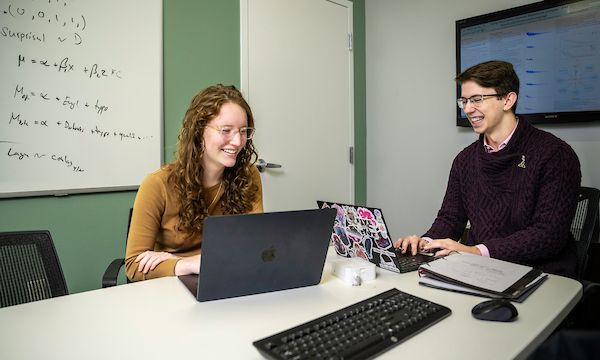
Advance student success through applied, career-connected learning
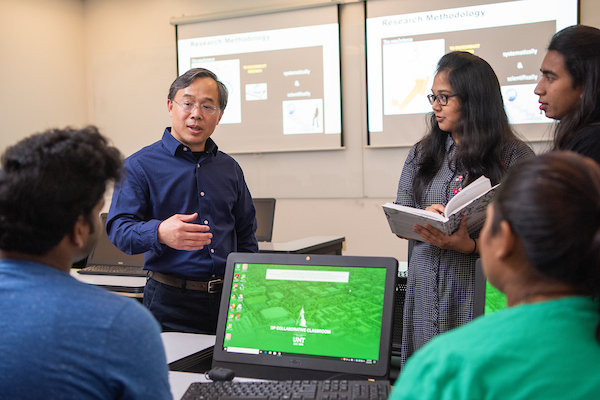
Strengthen faculty and staff capacity to deliver excellence
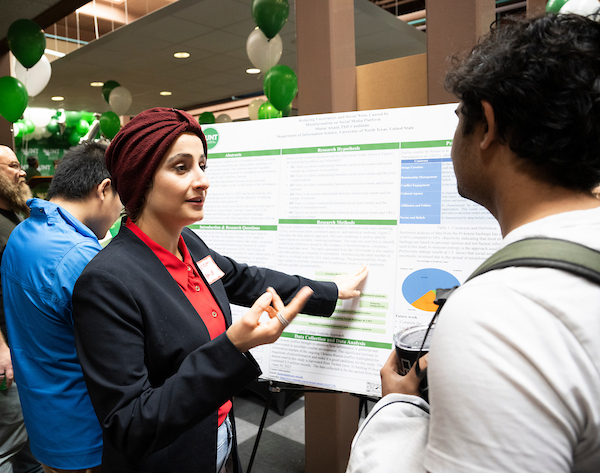
Focus research and discovery for public impact

Advance partnerships and translation to practice
Our Implementation Priorities
-
Applied, career-connected learning expansion: COI will launch Phase 1 of the Informatics Industry Innovation Center, embed micro-internships and applied projects across courses, and pilot 3-5 workforce-aligned stackable credentials informed by Texas Talent Accelerator data, building toward at least 15 active applied learning partners and updated career-ready curriculum across all programs.
-
Faculty and staff capacity building: COI will formalize grant-writing groups and collaboration forums, pilot faculty externships with regional employers in fields like data science, AI, UX, and health informatics, and establish an Associate Dean for Institutional Success and Strategic Partnerships to coordinate mentoring, incentive alignment, and partnership engagement across the college.
-
Research, discovery, and visibility: COI will launch the InfoTalks workshop series, implement internal seed funding for interdisciplinary research, strengthen grant development support, and build a public-facing digital research dashboard, aiming to fund at least three seed projects and grow external proposal submissions by FY27.
-
Interdisciplinary and collaborative innovation: COI will use the UNT Curriculum Connector to formalize cross-college research and credential collaboration with Engineering, Business, Public Affairs and Health Sciences, CLASS, and UNT Health, establishing interdisciplinary research clusters and submitting at least three joint proposals while developing shared credential pathways by Spring 2027.
-
Partnerships, innovation, and translation: COI will pilot coordinated partnership intake and project-scoping processes, launch employer-engaged innovation initiatives such as design-thinking workshops and applied challenge competitions, and expand strategic partnership agreements in priority sectors, targeting 5 to 10 new or expanded agreements and at least one cost-recovery pilot by FY27.
Core Metrics
UNT Baseline (2024/25): 77% | UNT Target (2030): 90%
COI Baseline (2024/25): 93.3% | COI Target (2030): 95%
College contribution to achieving targets:
- COI will expand applied, career-connected learning, structured mentoring, and curriculum alignment to keep students engaged and progressing toward degree completion.
UNT Baseline (2024/25): 42% | UNT Target (2030): 65%
COI Baseline (2024/25): 64.5% | COI Target (2030): 70%
College contribution to achieving targets:
- Embedding applied learning, stackable credentials, and coordinated advising across academic pathways will help students complete degree requirements on time.
UNT Baseline (2024/25): 61% | UNT Target (2030): 80%
COI Baseline (2024/25): 76.5% | COI Target (2030): 82%
College contribution to achieving targets:
- Flexible delivery models, employer-aligned credentials, and structured applied pathways will support sustained progress toward completion for students across all timelines.
UNT Baseline (2024/25): $124M | UNT Target (2030): $250M
COI Baseline (2024/25): $4.0M | COI Target (2030): $7.0M
College contribution to achieving targets:
- Seed funding, structured grant-development groups, and shared research infrastructure will grow external proposal submissions and expand COI's funded research portfolio.
UNT Baseline (2024/25): 286 | UNT Target (2030): 300
COI Baseline (2024/25): 39 | COI Target (2030): 45
College contribution to achieving targets:
- Expanded doctoral research participation, mentorship, and interdisciplinary research clusters will support growth in completions across COI's doctoral programs.
UNT Baseline (2024/25): 6 years | UNT Target (2030): Decrease time for programs over
median
COI Baseline (2024/25): 4 years (median) | COI Target (2030): 3.5 years (median)
College contribution to achieving targets:
- Stackable credentials and flexible, career-aligned program delivery will continue to shorten the time COI graduates need to recoup their degree costs.
Emergent Metrics
Important Dimensions of Our Success that Require New Approaches
Percentage of graduates placed in high-demand occupations or graduate and professional programs
COI currently tracks limited post-graduation placement data through program-level surveys and tools such as Academic Analytics, with plans to add Steppingblocks for broader tracking. Some Information Science programs already survey graduates on job placement within 12 months, and this approach is expanding college-wide alongside broader outreach through email, social media, and alumni networks.
Percentage of academic programs that integrate internships, industry-sponsored projects, or other work-integrated learning experiences
Currently, 38% of COI programs formally require internships, industry-sponsored projects, or other career-aligned experiences, and 100% allow them for academic credit. COI plans to make applied learning a formal requirement across all degree programs and will build coordinated tracking for participation, employer engagement, and career-aligned experience integration.
Prestigious awards, exhibitions, and performances achieved by our students, faculty, staff, and alumni
COI tracks awards and recognitions through faculty performance reports, departmental submissions, and college communications. In 2025, students and alumni earned recognition from organizations including the American Library Association and the Society of American Archivists, and faculty held national leadership roles. A new annual alumni survey will help systematize tracking going forward.
New ventures, startups, and public impact projects launched by students, faculty, and alumni
In 2025, COI launched Entrepreneurial Workshops and an Annual Pitch Competition with faculty and industry leaders to support venture development. Achievements are currently self-reported through college communications, and COI plans to formalize tracking of startups, applied research ventures, and partnership-based entrepreneurial initiatives.
Perceptions of how well UNT prepares graduates to pursue lives of meaning and purpose
COI plans to add targeted questions to annual student and alumni surveys to assess career readiness and long-term impact. Existing measures include social media analytics and participation indicators from peer and performance evaluations, with expanded survey distribution and alumni outreach to strengthen longitudinal tracking.
College Level Metrics
- Academic excellence recognition: COI aims to increase the number of students earning Dean's List or President's List honors by 5% over the Spring 2025 baseline of 123, reflecting sustained academic excellence and supporting Goal 1 (student success).
- Faculty and staff recognition: COI will grow faculty and staff award nominations by 20%, with representation across all departments and staff units, strengthening engagement, recognition culture, and retention in support of Goal 2 (faculty and staff capacity).
- Alumni engagement: COI will increase alumni engagement activities and involvement by 30%, strengthening career-connected learning, industry partnerships, and long-term philanthropic sustainability in support of Goal 4 (partnerships and translation).
- Enrollment pipeline development: COI will grow high school and community college student engagement activities, including spot admissions, by 40%, expanding awareness of information-driven careers and reinforcing long-term student success goals.
- Mentorship program participation: COI will increase participation by mentors and mentees in the College Mentorship Program by 75%, enhancing retention, career-readiness, and applied learning support in service of Goals 1 and 4.