 University of North Texas

Who We Are
The UNT College of Public Affairs and Health Sciences prepares students to do work that makes a difference. With hands-on learning, real-world experience, and deep community partnerships, students turn knowledge into action: improving health, strengthening public systems, and supporting communities. From physical and behavioral health to public service, public affairs, and social work, PAHS serves as a critical workforce pipeline for North Texas and beyond. Across these disciplines, PAHS is united by a shared commitment to strengthening the well-being, resilience, and functioning of individuals, communities, and public systems.
PAHS will be defined not by what it studies, but by what it improves.
By aligning education, research, and service with emerging trends, workforce needs, and community priorities, the college doesn't just prepare graduates for careers; it prepares them to lead, adapt, and make meaningful impact within the organizations, systems, and communities they serve.
Download Full Plan COLLEGE OF Public Affairs and Health Sciences
Our Strategic Goals (2026–2030)

Integrated career-ready learning that advances workforce and public impact
Structured academic pathways that improve retention and timely completion

Strategic expansion of health programs to meet regional workforce needs

Curricular innovation and workforce alignment in public affairs

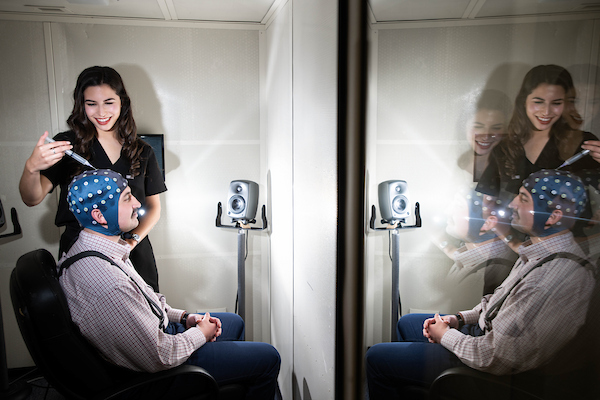
Applied, interdisciplinary research with public and clinical impact
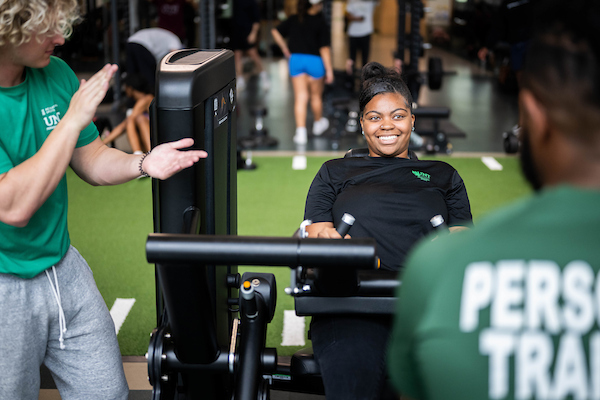
Community impact and applied solutions at scale
Our Implementation Priorities
-
Build AI-enabled workforce readiness: PAHS will establish college-wide Responsible AI Standards and partner with academic program advisory boards to identify workforce-relevant AI skills and professional use cases. This work will produce pilot-ready curricular guidance, positioning every PAHS program to scale responsible AI integration into the classroom in future years.
-
Expand career-aligned learning for every student: PAHS will embed a required, credit-bearing career-aligned learning experience in every undergraduate program. The college will complete a full program inventory and capacity analysis, then work with employer and community partners to identify scalable options for departments that do not yet offer one.
-
Strengthen structured academic pathways: PAHS will redesign transparent undergraduate degree maps, define program-specific academic milestones, and establish coordinated, data-informed advising outreach across academic departments and career services. These efforts will reduce excess credit hours, improve transfer alignment with community college partners, and support stronger retention and completion.
-
Plan a nursing cohort and interdisciplinary simulation lab: In partnership with UNT Health, PAHS will develop an operational model and feasibility analysis for a campus-based undergraduate nursing cohort, alongside a shared-use simulation lab framework supporting clinical and health systems leadership training. This work will culminate in an institutional proposal for executive review.
-
Launch the North Texas Well-Being Study: PAHS will establish an interdisciplinary faculty, student, and community partner network and finalize the design of a longitudinal survey, partnering with a survey vendor to conduct the first round of regional data collection. Results will produce baseline well-being insights for North Texas by fall 2027.
Core Metrics
UNT Baseline (2024/25): 77% | UNT Target (2030): 90%
PAHS Baseline (2024/25): 71.8% | PAHS Target (2030): 90%
College contribution to achieving targets:
- PAHS will improve retention through structured academic pathways, proactive advising, and milestone-based progression supports, building academic momentum and connection from a student's first year onward.
UNT Baseline (2024/25): 42% | UNT Target (2030): 65%
PAHS Baseline (2024/25): 41.9% | PAHS Target (2030): 55%
College contribution to achieving targets:
- Structured academic pathways and proactive advising will help PAHS students accumulate fewer excess credit hours and progress more efficiently toward on-time, four-year completion.
UNT Baseline (2024/25): 61% | UNT Target (2030): 80%
PAHS Baseline (2024/25): 61.5% | PAHS Target (2030): 80%
College contribution to achieving targets:
- Improved academic momentum and milestone-based advising, paired with stronger transfer and community college partnerships, will support sustained gains in six-year completion across PAHS programs.
UNT Baseline (2024/25): $124M | UNT Target (2030): $250M
PAHS Baseline (2024/25): $6.9M | PAHS Target (2030): $9.67M
College contribution to achieving targets:
- PAHS will grow research expenditures through interdisciplinary collaboration, enhanced proposal development support, and sustained external partnerships, even as a major federal award concludes.
UNT Baseline (2024/25): 286 | UNT Target (2030): 300
PAHS Baseline (2024/25): 15 | PAHS Target (2030): 20
College contribution to achieving targets:
- PAHS will grow doctoral output by strengthening faculty mentorship, expanding interdisciplinary research opportunities, and supporting timely progression toward dissertation completion.
UNT Baseline (2024/25): 6 years | UNT Target (2030): Decrease time for programs over
median
PAHS Baseline (2024/25): 7 years median | PAHS Target (2030): 6 years, with improvement
for all degrees currently above median
College contribution to achieving targets:
- Expanding career-aligned learning and structured academic pathways will help PAHS graduates reach degree completion and career entry more efficiently, reducing time to value.
Emergent Metrics
Important Dimensions of Our Success that Require New Approaches
Percentage of graduates placed in high-demand occupations or graduate and professional programs
Some PAHS departments track this data at the graduate level. At the college level, PAHS will leverage Academic Analytics for graduate placement information and develop more robust undergraduate options over the course of this plan.
Percentage of academic programs that integrate internships, industry-sponsored projects, or other work-integrated learning experiences
PAHS collects this information through a program-by-program inventory of internships, practicums, and other required career-aligned placements, and is also building an inventory of experiential learning tied to industry-integrated projects.
Prestigious awards, exhibitions, and performances achieved by our students, faculty, staff, and alumni
PAHS recently created a tracking spreadsheet for this information and is currently working with departments to complete historical data.
New ventures, startups, and public impact projects launched by students, faculty, and alumni
PAHS does not currently track this but plans to add this tracking to its documentation.
Perceptions of how well UNT prepares graduates to pursue lives of meaning and purpose
PAHS has not previously captured this data. The college has surveyed current undergraduate and graduate students but has not yet explored these questions with alumni and will look at annual alumni surveys as a future tool.
College Level Metrics
- Number of community engagements, partners, and service projects: This metric demonstrates PAHS's role as a regional partner in public affairs and health. Tracking community partners and service projects shows how applied learning, policy engagement, service delivery, and workforce preparation strengthen public systems, community well-being, and talent pipelines central to Look North: UNT 2030’s Develop priority.
- Annual hours of student service to the community: Student service hours are tracked because they demonstrate the college's tangible community impact while providing clear evidence of sustained, high-quality experiential and career-aligned learning.
- Licensure and certification pass rates: For programs with licensure requirements, pass rates are tracked because they provide a clear, externally validated indicator of program quality, workforce readiness, and graduates' ability to meet the professional standards required for effective practice in their fields.
- Faculty scholarly productivity, external funding, and external recognition: This metric captures the scholarly productivity, funding activity, and external recognition that sustain PAHS's academic quality and reputation. It supports recruitment, rankings, accreditation, and fundraising, while providing leading indicators for research growth, faculty capacity, and the college's long-term impact in public affairs and health.