 University of North Texas

Who We Are
The UNT College of Science prepares its almost 4,000 students for careers in natural, physical, mathematical, analytical, and medical sciences through classroom instruction and involvement in cutting-edge research and scholarly activities. Our college's core departments of Biological Sciences, Chemistry, Data Analytics and Statistics, Mathematics, and Physics are home to many state-of-the-art research centers and facilities, including the Advanced Environmental Research Institute, the BioDiscovery Institute, and the ElmFork Education Center. As an essential pillar of UNT's reputation as a Carnegie R1 research university, the College of Science is known internationally for excellence in scientific research and discovery, training the world's next generation of scientists, health professionals, and educators.
Our Strategic Goals (2026–2030)
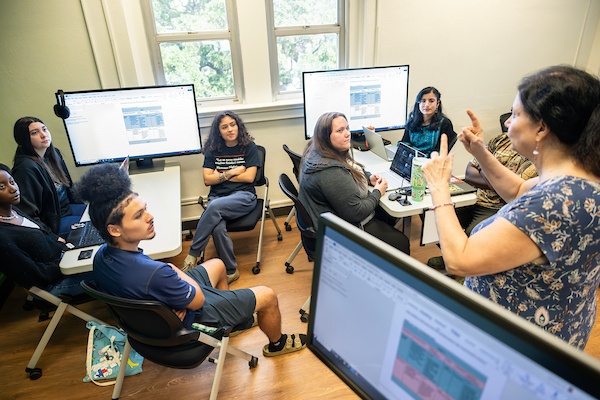
Modernize foundational STEM education and student pathways

Expand authentic research experiences for students
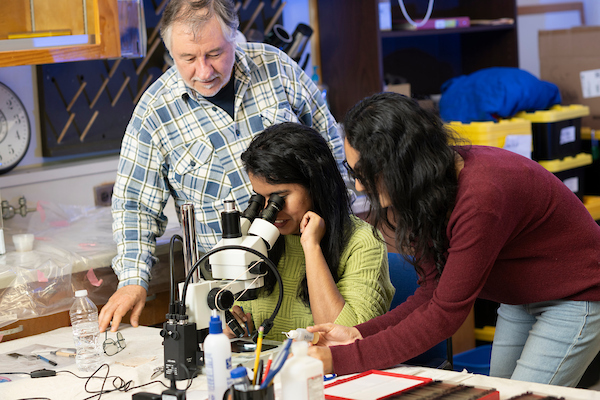
Strengthen faculty research and external funding
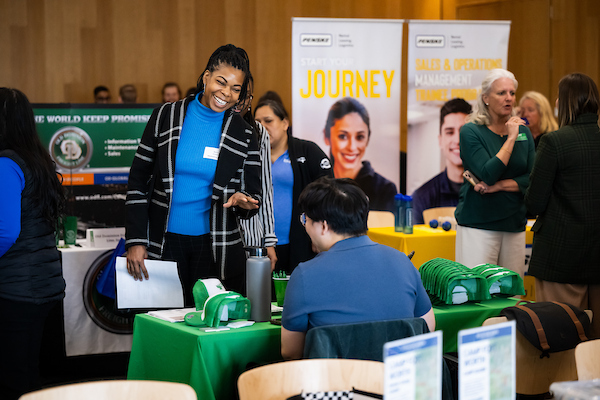
Grow industry, government, and community partnerships
Our Implementation Priorities
-
Launch the School of Mathematics and Science Foundations: A new academic unit will modernize the first-year experience for COS majors, redesigning high-enrollment introductory courses, coordinating advising, and supporting faculty through structured communities of practice focused on evidence-based, student-centered teaching.
-
Align curriculum and strengthen academic advising: COS will conduct a comprehensive review of undergraduate degree programs and advising practices to ensure clear learning progressions, reduce excess credit accumulation, and strengthen pathways connecting introductory coursework, upper-division expectations, and workforce-relevant skills.
-
Build supportive pathways through gateway courses: A new "pit stop" course will give students who struggle early in introductory science classes, such as Biology 1710, a supportive option to build foundational skills before re-entering the gateway course, strengthening academic confidence and retention.
-
Expand student research opportunities: COS will broaden access to authentic research experiences through course-based research, mentored opportunities, a new cross-disciplinary research seminar, and targeted training grants, building a stronger pipeline into graduate study and research-intensive STEM careers.
-
Strengthen faculty research and interdisciplinary collaboration: COS will deepen research partnerships with the College of Engineering, UNT Health, and other campus units, support large multi-investigator grant proposals, and grow faculty hiring in priority areas to expand the college's research capacity and external funding.
-
Grow industry, government, and community partnerships: New department-level advisory boards and a dedicated industry engagement position will help COS align curricula with workforce needs, expand internships and applied research, and strengthen the college's role in regional economic development.
Core Metrics
UNT Baseline (2024/25): 77% | UNT Target (2030): 90%
COS Baseline (2024/25): 76.0% | COS Target (2030): 90%
College contribution to achieving targets:
- The School of Mathematics and Science Foundations, redesigned gateway courses, and the new pit-stop pathway will give first-year students stronger advising, support, and academic skill-building during their most critical semester.
UNT Baseline (2024/25): 42% | UNT Target (2030): 65%
COS Baseline (2024/25): 37.7% | COS Target (2030): 65%
College contribution to achieving targets:
- Curriculum alignment, streamlined advising, and reduced excess credit accumulation will help COS students move through their degree plans more efficiently and graduate within four years.
UNT Baseline (2024/25): 61% | UNT Target (2030): 80%
COS Baseline (2024/25): 59.0% | COS Target (2030): 80%
College contribution to achieving targets:
- Structured academic pathways, expanded advising support, and stronger early intervention for students in gateway courses will help more COS students reach graduation, even those who need additional time.
UNT Baseline (2024/25): $124M | UNT Target (2030): $250M
COS Baseline (2024/25): $24.4M | COS Target (2030): $50M
College contribution to achieving targets:
- Growth in interdisciplinary research, new faculty hires in priority areas, and expanded support for large multi-investigator grant proposals will drive growth in COS research expenditures.
UNT Baseline (2024/25): 286 | UNT Target (2030): 300
COS Baseline (2024/25): 40 | COS Target (2030): 55
College contribution to achieving targets:
- Continued investment in graduate research training, faculty mentorship, and externally funded training grants will support growth in the number of doctoral degrees awarded across COS departments.
UNT Baseline (2024/25): 6 years | UNT Target (2030): Decrease time for programs over
median
COS Baseline (2024/25): 8 years (median) | COS Target (2030): Decrease time to value
for programs over the median
College contribution to achieving targets:
- Curriculum alignment, clearer degree pathways, and reduced excess credit accumulation will help decrease time to value for COS programs that currently exceed the university median.
Emergent Metrics
Important Dimensions of Our Success that Require New Approaches
Percentage of graduates placed in high-demand occupations or graduate and professional programs
Several COS programs, including forensic science, Teach North Texas, the actuary program, and health professions advising, already track graduate placement. The college is developing a more consistent, college-wide approach to gathering this data to guide curriculum decisions.
Percentage of academic programs that integrate internships, industry-sponsored projects, or other work-integrated learning experiences
Several COS programs, including Teach North Texas, forensic science, medical laboratory sciences, and the actuary certificate in mathematics, already integrate career-aligned learning into their instruction and training.
Prestigious awards, exhibitions, and performances achieved by our students, faculty, staff, and alumni
Departments track awards and honors for their own faculty and staff, but college-wide records are fragmented. COS will build a stronger, centralized system to track and promote achievements across departments.
New ventures, startups, and public impact projects launched by students, faculty, and alumni
Several COS faculty and programs are active in innovation and entrepreneurship, though college-wide tracking is currently limited. COS will work to build a clearer, more comprehensive picture of this activity.
Perceptions of how well UNT prepares graduates to pursue lives of meaning and purpose
College-wide tracking of student and alumni engagement is limited, though Teach North Texas connects alumni mentors with new students through regular events. COS will strengthen alumni outreach and tracking in partnership with the UNT Alumni Association.
College Level Metrics
- Awards, honors, and presentations: Tracks recognitions earned by undergraduate and graduate students, reflecting the quality of research training, mentoring, and research experiences offered across COS programs.
- Career paths of postdoctoral fellows and graduate students: Tracks where COS-trained postdoctoral fellows and graduate students go after their time in the college, reflecting the long-term impact and productivity of COS research programs.
- Faculty, staff, and student publications: Tracks scholarly output across the college, an important measure of research productivity for a college with a strong research portfolio.
- Course drop, fail, withdrawal, and incomplete rates in gateway courses: Tracks student performance in high-enrollment introductory science and math courses, including through the college's First Exam Grade Campaign, to identify where additional support is needed.
- Success in follow-up courses: Tracks how students perform in courses that build on foundational coursework, helping COS assess how well introductory courses prepare students for continued success.
- Time to graduation: Tracks how long it takes COS students to complete their degrees, a key indicator of time to value that the college will use to measure progress toward its goals.
- External funding, innovation, and startups: Tracks COS's contribution to UNT's goal of doubling research expenditure funding by 2030, including growth in external grants, innovation activity, and startup formation.