 University of North Texas

Who We Are
At the College of Visual Arts and Design, we cultivate creative leaders and critical thinkers within a collaborative, rigorous, and forward-looking environment. Our work is driven by an unwavering commitment to student success, nationally recognized faculty, state-of-the-art facilities, and the dynamic creative economy of North Texas. We advance our mission through creative excellence, purposeful innovation, and interdisciplinary inquiry that connects making, research, and real-world impact.
With nearly 2,600 students, CVAD is one of the nation's largest and most comprehensive colleges of art and design, situated within a Carnegie R1 research university. Our 30 undergraduate and graduate degree programs include a nationally ranked graduate fine arts program, a graphic design program ranked first in the Southwest, a user-experience program ranked second in Texas, and the state's only Ph.D. in Art Education.
Our Strategic Goals (2026–2030)

Serving students uniquely
Building interdisciplinary research and innovation capacity

Expanding professional and global pathways
Our Implementation Priorities
-
Serving students uniquely: CVAD will revise and submit a modernized art appreciation curriculum through institutional approval channels, assess Foundations course sequencing against student success metrics, and submit one to two new credential programs designed for working professionals and adult learners, including expanded pathways for Interdisciplinary Art and Design Studies (IADS), Art History, and Art Education students.
-
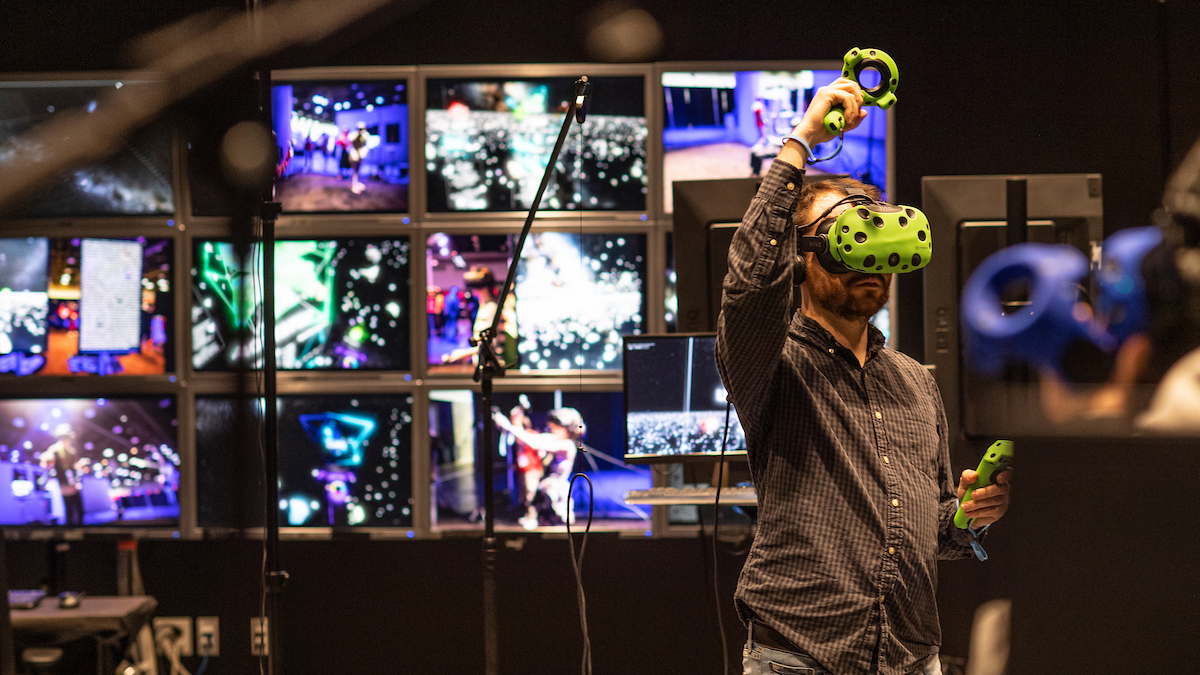
Building interdisciplinary research and innovation capacity: CVAD will formally launch the Curiosity Lab with initial cross-college programming, reinstate college-level research development support, and bring the Spark Lab online with a defined research agenda and early industry partnerships.
-
Expanding professional and global pathways: CVAD will advance its online Ph.D. in Interdisciplinary Art and Design through formal approval processes, submit at least one new professional credential in user-experience design, and secure preliminary industry partners for the Year in Dallas residency model.
Core Metrics
UNT Baseline (2024/25): 77% | UNT Target (2030): 90%
CVAD Baseline (2024/25): 74.2% | CVAD Target (2030): 90%
College contribution to achieving targets:
- CVAD supports retention through expanded Creative U pipelines, modernized Core and Foundations curriculum, and reduced DFW rates in high-enrollment courses that build early student engagement and momentum.
UNT Baseline (2024/25): 42% | UNT Target (2030): 65%
CVAD Baseline (2024/25): 39.5% | CVAD Target (2030): 65%
College contribution to achieving targets:
- CVAD advances four-year completion by modernizing Core and Foundations curriculum, reducing DFW rates in high-enrollment courses, and creating new pathways that help students progress toward their degree without delay.
UNT Baseline (2024/25): 61% | UNT Target (2030): 80%
CVAD Baseline (2024/25): 58.9% | CVAD Target (2030): 80%
College contribution to achieving targets:
- CVAD supports six-year completion by expanding access for nontraditional and working learners, developing flexible credential pathways, and strengthening curricular and advising support across the full student journey.
UNT Baseline (2024/25): $124M | UNT Target (2030): $250M
CVAD Baseline (2024/25): $2.5M | CVAD Target (2030): $4M
College contribution to achieving targets:
- CVAD aims to grow research expenditures by reinstating research development support, building sustainable funding models, and expanding faculty and student engagement in interdisciplinary research through the Curiosity Lab and Spark Lab.
UNT Baseline (2024/25): 286 | UNT Target (2030): 300
CVAD Baseline (2024/25): 4 | CVAD Target (2030): 10
College contribution to achieving targets:
- CVAD plans to grow doctoral production by transforming its Ph.D. in Art Education into an online, globally accessible Ph.D. in Interdisciplinary Art and Design, expanding access for working professionals worldwide.
UNT Baseline (2024/25): 6 years | UNT Target (2030): Decrease time for programs over
median
CVAD Baseline (2024/25): Median = 9 years | CVAD Target (2030): Decrease time for
programs over the median
College contribution to achieving targets:
- CVAD aims to decrease time to degree for programs above the median, with focused efforts in the studio art program, alongside curricular modernization and expanded advising support.
Emergent Metrics
Important Dimensions of Our Success that Require New Approaches
Percentage of graduates placed in high-demand occupations or graduate and professional programs
CVAD currently tracks placement informally through individual programs. Beginning in FY27, the college will launch a centralized alumni outcomes database with the Career Center to track employment and graduate placement within six months of graduation.
Percentage of academic programs that integrate internships, industry-sponsored projects, or other work-integrated learning experiences
Many CVAD programs already integrate internships, sponsored studios, and client-based coursework, though this isn't centrally tracked. In FY27, the college will create a standardized way to measure career-aligned learning participation across programs.
Prestigious awards, exhibitions, and performances achieved by our students, faculty, staff, and alumni
Student and faculty awards, exhibitions, and performances are currently tracked informally at the program level. CVAD will establish an annual recognition reporting system to document national and international distinctions.
New ventures, startups, and public impact projects launched by students, faculty, and alumni
CVAD does not currently track venture formation or entrepreneurial activity launched by students and alumni. Beginning in FY27, the college will develop mechanisms to capture these outcomes in partnership with university innovation initiatives.
Perceptions of how well UNT prepares graduates to pursue lives of meaning and purpose
CVAD has historically participated in the SNAAP national arts alumni survey. Beginning in FY27, the college will supplement this with targeted alumni surveys to better understand career trajectories and long-term impact.
College Level Metrics
- Faculty teaching deployment: Ensures balanced and efficient teaching load distribution aligned with enrollment demand, revenue generation, and faculty expectations.
- Faculty retention: Tracks retention trends, compensation competitiveness, and climate indicators to sustain program quality, research productivity, and institutional knowledge.
- Staff retention: Tracks staff retention and workplace climate to preserve operational continuity, service quality, and morale in a resource-constrained environment.
- Progression into major status: Monitors student progression into major status to assess program capacity, student demand, and access across degree pathways.
- DFW rates in large-scale courses: Tracks DFW rates in Foundations courses and Art Appreciation 1300 to improve student success in completing freshman-level requirements.