 University of North Texas

Who We Are
The Division of Enrollment supports students with a caring spirit by providing access and clear pathways to educational opportunity. Guided by a vision of delivering a simplified, nurturing enrollment experience from recruitment to graduation, the division leads services that help students apply, gain admission, secure financial aid, pay tuition, register for classes, and engage with UNT through personalized communications and pathway programs. The division also manages core technologies and delivers data-informed insights that shape university-wide decisions and strengthen student success.
Our Strategic Goals (2026–2030)
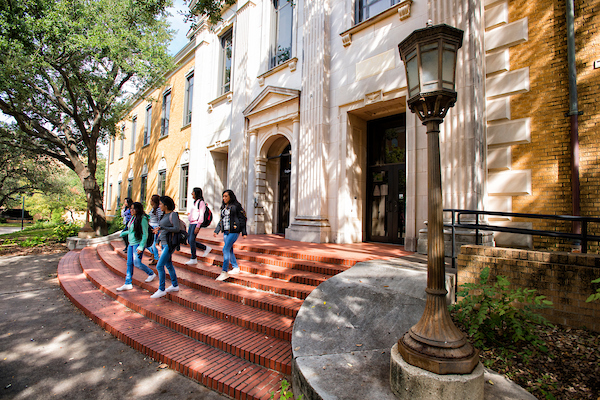
Expand opportunities to access workforce-aligned credentials

Modernize academic and enrollment systems
Embed data intelligence and predictive analytics
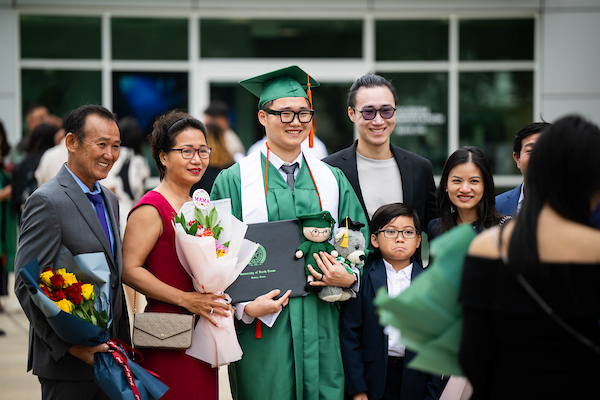
Deliver a coordinated, personalized enrollment-to-graduation experience
The division is creating a seamless, technology-enabled student experience from recruitment through graduation, using student personas, family engagement platforms, and self-service tools to ensure every student receives the right information, at the right time, through the right channel.
Strengthen affordability and financial capability
By expanding financial aid coverage for Pell-eligible students, enhancing transparency in college costs, and delivering financial literacy programming, the division supports UNT's culture of financial resilience and directly improves persistence and completion for students who might otherwise stop out.
Our Implementation Priorities
-
Expanding access and enrollment pipelines: Scaling innovative community college admission partnerships, growing early ISD engagement programs, and advancing cross-departmental strategies to expand access to credentials aligned with emerging workforce needs. Key actions include targeted admissions funnel management, segmented communications for prospective populations, and collaborative development of new graduate access routes.
-
Modernizing academic and enrollment systems: Implementing success-focused smart schedules for all incoming first-year students, deploying AI-assisted transcript evaluation for faster admissions and credit articulation, and creating flexible enrollment processes to accommodate co-enrollment, alternative pathways, and nontraditional learner schedules. Expected to improve course-fill rates and reduce scheduling inefficiencies beginning Fall 2026.
-
Deploying predictive analytics for student success: Launching a first- and second-year predictive student success score and a predictive financial support intelligence tool to identify risk factors and enable proactive, targeted interventions. Developing unified leadership dashboards that align enrollment performance, persistence, and financial health data into a single decision-making framework.
-
Delivering a personalized enrollment-to-graduation experience: Expanding use of the UNT Family Portal for timely, relevant communications to families of prospective and current students; defining student personas to personalize recruitment and engagement; and improving mobile and portal navigation to strengthen student self-service and reduce routine administrative inquiries.
-
Strengthening affordability and financial capability: Increasing the percentage of Pell-eligible students with full tuition and fee coverage through renewable aid awards, expanding graduate tuition benefit programs, and growing financial literacy programming through the Student Money Management Center to reduce stop-outs and improve long-term persistence.
Core Metrics
UNT Baseline (2024/25): 77% | UNT Target (2030): 90%
Unit contribution to achieving targets:
- Proactive communications, predictive analytics, financial aid strategies, and course scheduling optimization work together to identify risk early and reduce procedural barriers to continued enrollment.
UNT Baseline (2024/25): 42% | UNT Target (2030): 65%
Unit contribution to achieving targets:
- Credit articulation improvements, guided pathways, smart scheduling, financial literacy programs, and targeted aid help students progress toward on-time completion.
UNT Baseline (2024/25): 61% | UNT Target (2030): 80%
Unit contribution to achieving targets:
- Data-driven interventions, articulation agreements, course availability optimization, and financial support strategies address persistence barriers across longer degree timelines.
UNT Baseline (2024/25): $124M | UNT Target (2030): $250M
Unit contribution to achieving targets:
- N/A
UNT Baseline (2024/25): 286 | UNT Target (2030): 300
Unit contribution to achieving targets:
- Targeted graduate recruitment, expanded tuition benefit programs, and personalized communications support doctoral students through enrollment, financial, and degree progression milestones.
UNT Baseline (2024/25): 6 years | UNT Target (2030): Decrease time for programs over median
Unit contribution to achieving targets:
- Credit articulation, pathway partnerships, degree planning tools, and targeted financial assistance support efficient progression and reduce overall cost-to-completion.
Emergent Metrics
Important Dimensions of Our Success that Require New Approaches
Percentage of graduates placed in high-demand occupations or graduate and professional programs
Collaborates with academic departments and the National Student Clearinghouse to collect and visualize post-graduation placement data for UNT leaders and stakeholders.
Percentage of academic programs that integrate internships, industry-sponsored projects, or other work-integrated learning experiences
Collaborates with academic departments and colleges to collect career-aligned learning data for analysis and visualization.
Prestigious awards, exhibitions, and performances achieved by our students, faculty, staff, and alumni
Collaborates with the Office of the Provost, Student Affairs, Human Resources, Advancement, and staff workgroups to capture awards and recognition data.
New ventures, startups, and public impact projects launched by students, faculty, and alumni
Collaborates with innovation and entrepreneurship leads at UNT to capture data on new ventures, startups, and public impact projects.
Perceptions of how well UNT prepares graduates to pursue lives of meaning and purpose
Staff from multiple departments serve on UNT's student survey committee; NSSE and SERU data are used to capture and visualize perceptions of preparedness and purpose.
Unit Level Metrics
- Grow enrollment at a sustainable pace: Steady, manageable enrollment growth supports the university's vision and ensures UNT can scale without compromising academic quality, student support, or infrastructure.
- Increase student participation in partnership pathways: Expanding participation in partnership pathways strengthens enrollment pipelines, broadens access, and aligns academic offerings with community, workforce, and transfer needs.
- Increase Pell-eligible students’ retention and graduation rates: Improving outcomes for Pell-eligible students through targeted support advances student success and economic mobility post-graduation.
- Increase number of semester credit hours per student: Encouraging higher average credit loads promotes academic momentum, shortens time-to-degree, and improves graduation rates.