 University of North Texas

Who We Are
Since 1942, the G. Brint Ryan College of Business at the University of North Texas has been preparing students for success in business and public service by imparting the technical and practical knowledge and expertise essential to their fields of study. With more than 8,500 students, we offer a broad range of undergraduate and graduate programs, flexible class schedules, career services, and co-curricular opportunities. We prepare our students for success by teaching them to be critical thinkers, unstructured problem-solvers, and good communicators who appreciate the changing demands of the corporate community.
Our Strategic Goals (2026–2030)
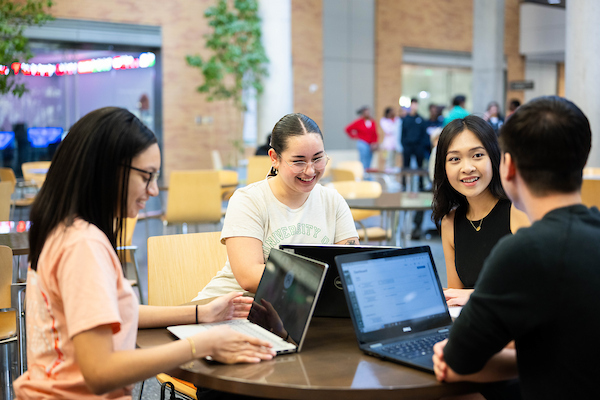
Anticipate and drive change in academic offerings
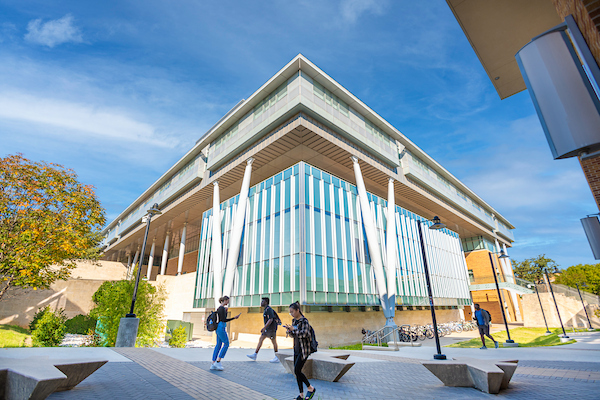
Build intellectual capital through transformative research

Provide outstanding career development support for students
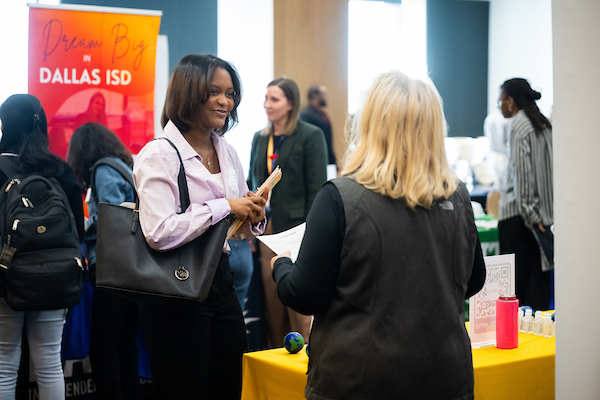
Create a culture of engagement for our constituents
Our Implementation Priorities
-
Build a four-year mentoring program: Supports UNT's goal to develop students' full potential, given the strong link between mentoring and retention. RCOB will build out its mentoring program with an alumnus partner, mapping distinct mentoring activities across all four years and adding a corporate advisory board, with mentor matching beginning at New Student Orientation in Fall 2026.
-
Formalize a startup and commercialization process: Supports UNT's goal to discover new knowledge that bridges disciplines, in partnership with the Division of Research and Innovation. RCOB will design a structured pathway with VPRI staff, launch an accelerator, and bring up to 20 early-stage companies into the program by Spring 2027.
-
Create regularly distributed business reports: Supports UNT's goals to discover new knowledge and drive progress for the region by positioning RCOB as a thought leader for the DFW business community. Each center will add a research arm responsible for collecting and contextualizing data, with at least two centers identified in year one and newsletters or reports published by Spring 2027.
-
Facilitate strategic partnerships at UNT at Frisco: Supports UNT's goal to drive progress for the region. RCOB will review and realign academic offerings at Frisco based on industry needs and enrollment trends, and add executive education programs for the Frisco-Plano-McKinney corporate community, with updated curriculum launching by Fall 2027.
-
Increase the college's research productivity: Supports UNT's goal to discover new knowledge and grow research expenditures. RCOB will add a proposal writer, expand seed grants and summer stipends, and update merit and promotion guidelines to better incentivize grant activity, working toward growing R&D expenditures from $13.6 million to $25 million by 2030.
-
Complete the merger of the College of Merchandising, Hospitality, and Tourism and the College of Applied and Collaborative Studies: Supports UNT's goals to develop an integrated college community and drive innovative, interdisciplinary business education. RCOB will finish transitioning faculty, staff, and programs into the college and complete the organizational restructuring by Fall 2027 while preserving specialized accreditations.
Core Metrics
UNT Baseline (2024/25): 77% | UNT Target (2030): 90%
RCOB Baseline (2024/25): 76.5% | RCOB Target (2030): 92%
College contribution to achieving targets:
- RCOB strengthens retention through boot camps, required certifications, supplemental instruction, and programs including First in Business, RCOB Edge, and a four-year mentoring initiative backed by a corporate advisory board.
UNT Baseline (2024/25): 42% | UNT Target (2030): 65%
RCOB Baseline (2024/25): 41.6% | RCOB Target (2030): 65%
College contribution to achieving targets:
- A new degree and curriculum audit, paired with integrated academic and career advising, will help students stay on track to graduate within four years.
UNT Baseline (2024/25): 61% | UNT Target (2030): 80%
RCOB Baseline (2024/25): 57.9% | RCOB Target (2030): 80%
College contribution to achieving targets:
- Flexible scheduling, alternative credentials, and expanded pathways for working students support completion for those who need more time to finish.
UNT Baseline (2024/25): $124M | UNT Target (2030): $250M
RCOB Baseline (2024/25): $13.6M | RCOB Target (2030): $25.0M
College contribution to achieving targets:
- RCOB will add a proposal writer, expand seed grants and summer stipends, and update promotion guidelines to incentivize grant activity and grow research expenditures.
UNT Baseline (2024/25): 286 | UNT Target (2030): 300
RCOB Baseline (2024/25): 11 | RCOB Target (2030): 20
College contribution to achieving targets:
- RCOB will grow doctoral education by expanding funded research opportunities and building on momentum across its most grant-active research groups.
UNT Baseline (2024/25): 6 years | UNT Target (2030): Decrease time for programs over
median
RCOB Baseline (2024/25): 4 years (median) | RCOB Target (2030): 4 years
College contribution to achieving targets:
- RCOB's median time to value is already well under the university baseline, and the college will maintain this advantage as enrollment grows.
Emergent Metrics
Important Dimensions of Our Success that Require New Approaches
Percentage of graduates placed in high-demand occupations or graduate and professional programs
RCOB's limited post-graduation salary data show graduates earning above-average salaries for their discipline compared to other Texas public universities. The college is pursuing credit bureau data to refine this measure and is working to improve its roughly 50% survey response rate for first-career information.
Percentage of academic programs that integrate internships, industry-sponsored projects, or other work-integrated learning experiences
100% of undergraduate degrees will include a required internship by Fall 2026, and every degree includes a capstone built around industry-sponsored projects or live industry cases.
Prestigious awards, exhibitions, and performances achieved by our students, faculty, staff, and alumni
RCOB students regularly place first or second in national and regional case competitions. Many alumni reach C-suite roles, and faculty are recognized for publication in premier journals and high citation rates.
New ventures, startups, and public impact projects launched by students, faculty, and alumni
The Murphy Center and Sports Innovation Space provide mentoring and accelerator space for student and faculty startups, connecting founders to seed and angel funding.
Perceptions of how well UNT prepares graduates to pursue lives of meaning and purpose
RCOB's advisory board surveys graduating students, and the dean holds regular coffee chats to gather direct feedback. Alumni engagement is assessed through events, stewardship activities, and giving levels.
College Level Metrics
- Number of funded research proposals submitted: Represents the breadth of faculty engagement in funded research.
- Funded research awards and expenditures: Represents success in securing external support and assessing where the college can improve.
- Number of Fortune 100 companies that recruit from or partner with the college: Assesses brand reputation and how job-ready students are perceived to be.
- Percentage of courses with drop, fail, withdraw, or incomplete (DFWI) rates above 20%: Assesses teaching quality and student readiness, guiding improvements to the learning experience.
- Annual funds raised through advancement activities: Represents the perceived value of the college among alumni and other constituents based on their giving.
- Faculty recognized as top 2% in their field: Demonstrates the impact of RCOB scholarship through citations and the caliber of its faculty.