 University of North Texas

Who We Are
The UNT Honors College and the Texas Academy of Mathematics and Science are interdisciplinary academic communities that support high-achieving students through rigorous coursework, faculty mentorship, and immersive learning experiences. Partnering across colleges and disciplines, TAMS and the Honors College foster undergraduate research, global engagement, leadership development, and civic responsibility. Through enriched academics and individualized support, these programs prepare students to excel academically, graduate on time, and pursue lives of meaning, impact, and service.
Download Full Plan Honors College Texas Academy of Mathematics and Science
Our Strategic Goals (2026–2030)
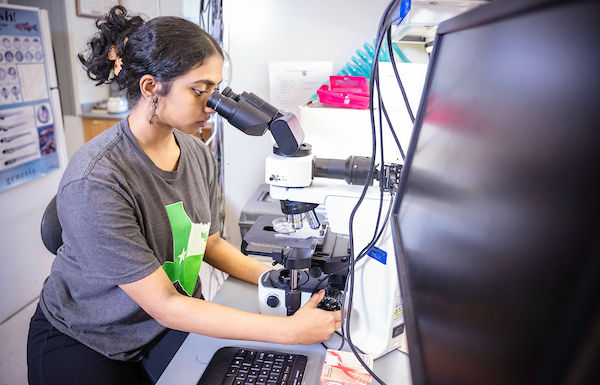
Strengthen student success and retention
Expand faculty-led high-impact learning

Advance global, civic, and experiential learning

Expand partnerships with alumni and community leaders
Our Implementation Priorities
-
Strengthen student success and retention: Implement a developmental advising model, expand group advising and self-care workshops, and apply findings from the annual Honors College Student Needs Assessment to improve engagement and academic outcomes. TAMS will expand recruitment in small and rural schools and continue strengthening summer research opportunities that connect students directly with faculty mentors.
-
Expand faculty partnerships and academic enrichment: Conduct a longitudinal review of honors course offerings, expand combined honors courses through departmental outreach, and recognize faculty contributions to honors teaching and mentoring. TAMS will continue funding summer research positions and grow private donor support to expand the number of available scholarships each year.
-
Advance global, civic, and experiential learning: Expand faculty-led study abroad and global intensive programs, promote experiential learning through HNRS 4200Z, and add civic discourse practice to the Honors College First Year Seminar. TAMS will launch a new entrepreneurial program with the G. Brint Ryan College of Business and convene its Development Board to engage alumni and donors.
-
Expand partnerships with alumni and community leaders: Work with the Alumni Association and Advancement to identify and engage Honors College alumni and launch a virtual alumni community and reception. TAMS will grow its donor campaign toward a seven-figure goal and launch a new summer research program for low-income students in partnership with the College of Education.
Core Metrics
UNT Baseline (2024/25): 77% | UNT Target (2030): 90%
Honors College Baseline (2024/25): 92.5% | Honors College Target (2030): 95%
College contribution to achieving targets:
- The Honors College sustains retention well above university benchmarks through developmental advising, academic enrichment, and targeted outreach for high-achieving students.
UNT Baseline (2024/25): 42% | UNT Target (2030): 65%
Honors College Baseline (2024/25): 69.8% | Honors College Target (2030): 75%
College contribution to achieving targets:
- A new degree and curriculum audit, paired with integrated academic and career advising, will help students stay on track to graduate within four years.
UNT Baseline (2024/25): 61% | UNT Target (2030): 80%
Honors College Baseline (2024/25): TBD | Honors College Target (2030): 80%
College contribution to achieving targets:
- Honors College baseline data collection for this metric is in progress. Given the college's strong performance on retention and four-year graduation, the target is set to match the university’s target.
UNT Baseline (2024/25): $124M | UNT Target (2030): $250M
Honors College Baseline (2024/25): $382K | Honors College Target (2030): $0.5M
College contribution to achieving targets:
- Honors College research investment, including its Undergraduate Research Fellowship, is funded primarily through UNT support, with a planned 10-15% increase over the next five years.
UNT Baseline (2024/25): 286 | UNT Target (2030): 300
Honors College Baseline (2024/25): N/A | Honors College Target (2030): N/A
College contribution to achieving targets:
- The Honors College does not award doctoral degrees; this metric is not applicable at the unit level.
UNT Baseline (2024/25): 6 years | UNT Target (2030): Decrease time for programs over
median
Honors College Baseline (2024/25): TBD | Honors College Target (2030): Decrease time
to value for programs over the median
College contribution to achieving targets:
- Honors College baseline data collection for this metric is in progress. The target mirrors the university's commitment to reducing time to value for programs above the median.
Emergent Metrics
Important Dimensions of Our Success that Require New Approaches
Honors College: Because honors is a program rather than a degree, outcomes are tracked through advising records and partnerships with the UNT Alumni Association, with ongoing work to better identify graduates in high-demand careers and graduate or professional programs.
TAMS: TAMS tracks each student's matriculation to their next undergraduate institution through an exit survey, and the TAMS Alumni Coordinator maintains ongoing contact with students after they leave the program.
Honors College: The Honors College tracks career-aligned learning through enrollment in HNRS 4200Z, which awards credit for internships, practicums, and applied experiences, along with participation in undergraduate research.
TAMS: TAMS monitors career-aligned learning mainly through student research positions, with TAMS Academics and the Research office tracking participation across roughly 60% of students during their time in the program.
Honors College: The Honors College tracks awards and recognitions through internal records, faculty reporting, and graduation data, including research presentations, scholarly publications, community-engagement honors, and competitive fellowships earned by graduating seniors and alumni.
TAMS: TAMS tracks student participation and placement in regional, national, and international science fairs and competitions, including the Regeneron Science Talent Search and national awards such as the Goldwater and Udall scholarships.
Honors College: Honors College records of student achievement, including self-reported and documented academic, research, and community accomplishments, help track innovative contributions by students and alumni on and off campus.
TAMS: TAMS shares updates on alumni ventures and public impact projects through its alumni newsletter and ongoing outreach for news contributions.
Honors College: The Honors College measures student engagement through participation in advising, workshops, and programming, and tracks alumni engagement through Honors College communications, mentorship programs, and partnerships with the Alumni Association and Career Center.
TAMS: TAMS gauges alumni impact on current students through seminar presentations, commencement speakers, and financial contributions to the Academy from former students.
College Level Metrics
Honors College
- Honors student retention: Measures the impact of Honors College participation on first-year retention by comparing honors students to a statistically matched group of high-achieving non-honors students who met honors eligibility criteria.
- Four-year graduation rate: Compares four- and six-year graduation outcomes for honors students against a matched group of high-achieving peers, showing the contribution of Honors participation to timely degree completion.
- Academic and engagement awards at graduation: Tracks the percentage of Honors College graduates earning academic, global, or community-engagement awards, reflecting depth of participation and completion of Honors pathways.
- Honors College Student Needs Assessment: An annual survey measuring how participation in honors courses, mentoring, advising, and programming shapes students' engagement and connection to UNT.
- Honors College Student Life Survey: Measures how Honors College Programming Council activities and other student-life initiatives affect students' satisfaction with and connection to the Honors College experience.
TAMS
- Two-year graduation rate: TAMS targets a consistent 90% graduation rate from its two-year program, exceeding the highest theoretical retention benchmark identified in gifted-and-talented program literature.
- Fall-to-Fall retention: TAMS aims for a 94% Fall-to-Fall retention rate for incoming cohorts, building on strong historical performance keeping students enrolled through graduation.
- Research participation: TAMS tracks the share of students engaged in summer research positions, currently around 60% of students during their two years in the program.
- Geographic access: TAMS tracks the share of students recruited from small, rural, and border-region communities, with a target of at least 10% of the student body by 2030.