 University of North Texas

Who We Are
University Brand Strategy and Communications supports University of North Texas strategic priorities by strengthening the university's brand, reputation, and visibility with key audiences, as well as driving key decisions from stakeholders related to enrollment, fundraising, and other support for the university.
Our work aligns the university's central marketing and communications efforts with enrollment, fundraising, and brand awareness and perception goals, while reinforcing UNT's identity as an emerging leader among universities that systematically integrate excellence, innovation, and access to create transformative learning opportunities.
Download Full Plan University Brand Strategy and Communications
Our Strategic Goals (2026–2030)

Increase UBSC's contributions to institutional enrollment goals
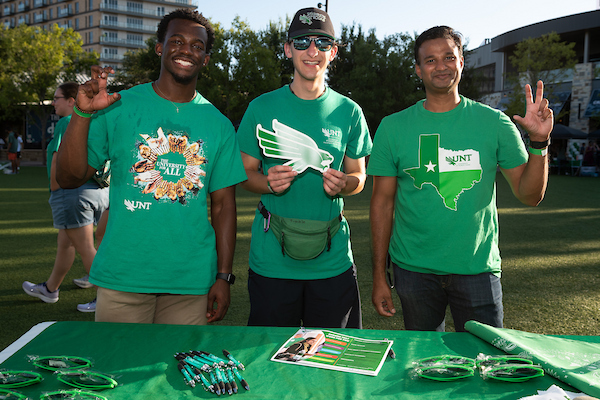
Improve brand awareness of the University of North Texas

Enhance brand perception of the University of North Texas
Our Implementation Priorities
-
Enrollment marketing across the full funnel: UBSC is expanding enrollment marketing to cover prospective student recruitment, admitted student yield, and current student retention. Work includes predictive scoring for first-time-in-college prospects, program-level advertising for priority academic programs, targeted email marketing, and collaboration with the Enrollment Advisory Council on retention-focused outreach strategies.
-
Brand personality and messaging: UBSC is refining UNT's brand identity through data-driven paid advertising, an audit of web design and messaging for brand alignment, and a clarified visual and messaging identity for UNT at Frisco. Investments are shifting toward digital platforms with performance measurement capabilities, with a goal of increasing brand equity and key conversions on unt.edu.
-
Brand positioning and brand story: UBSC is leveraging the Better Look North campaign to build a compelling brand narrative across earned and shared media. In partnership with campus communicators, UBSC will increase the volume and quality of media pitches and social content, targeting a 5% increase in positive media mentions and social engagement by August 2027.
Core Metrics
UNT Baseline (2024/25): 77% | UNT Target (2030): 90%
Unit contribution to achieving targets:
- UBSC will leverage UNT Today and the campus communicator network to increase student awareness and utilization of support resources that contribute to retention outcomes.
UNT Baseline (2024/25): 42% | UNT Target (2030): 65%
Unit contribution to achieving targets:
- UBSC will emphasize student outcomes in marketing by adding employment data to degree program pages and amplifying alumni success stories across professions and career paths.
UNT Baseline (2024/25): 61% | UNT Target (2030): 80%
Unit contribution to achieving targets:
- UBSC will emphasize student outcomes in marketing by adding employment data to degree program pages and amplifying alumni success stories across professions and career paths.
UNT Baseline (2024/25): $124M | UNT Target (2030): $250M
Unit contribution to achieving targets:
- UBSC will build a narrative positioning UNT as an emerging R1 research powerhouse through targeted stories on institutional progress and technology transfer achievements.
UNT Baseline (2024/25): 286 | UNT Target (2030): 300
Unit contribution to achieving targets:
- UBSC will expand marketing support for graduate programs aligned with institutional priorities, increasing the visibility of doctoral pathways and opportunities.
UNT Baseline (2024/25): 6 years | UNT Target (2030): Decrease time for programs over median
Unit contribution to achieving targets:
- UBSC will promote key initiatives that accelerate student time to value, including the Artificial Intelligence Certificate program and other high-impact credential pathways.
Emergent Metrics
Important Dimensions of Our Success that Require New Approaches
Percentage of graduates placed in high-demand occupations or graduate and professional programs
UBSC can promote high-demand programs; organic web traffic and user behavior data on academic program pages can inform which programs attract the most prospective student interest.
Percentage of academic programs that integrate internships, industry-sponsored projects, or other work-integrated learning experiences
N/A – UBSC does not currently hold data that directly contributes to this metric.
Prestigious awards, exhibitions, and performances achieved by our students, faculty, staff, and alumni
UBSC issues news releases and amplifies student, faculty, staff, and alumni achievements via web and social channels; could help compile recognition data with support from the campus communicator network.
New ventures, startups, and public impact projects launched by students, faculty, and alumni
UBSC promotes new ventures and projects through news releases and social media and could support data compilation on launches with assistance from campus communicators.
Perceptions of how well UNT prepares graduates to pursue lives of meaning and purpose
UBSC polling data captures stakeholder perceptions of brand equity, awareness, value, and emotional attributes; social media engagement provides additional insight into how constituents perceive UNT.
Unit Level Metrics
- Website traffic (users, page views, link clicks, time on site). User data and website engagement provide insight into both web performance and institutional momentum, helping UBSC and campus partners optimize unt.edu for key user actions.
- Earned media mentions and reach. The volume and reach of positive media coverage is a core indicator of institutional visibility and momentum.
- Social media engagement (likes, shares, comments). Engagement levels reflect stakeholder perception of the university and the effectiveness of UBSC's content strategy.
- Polling data. Regular survey data that provides insight into perceptions of the university.
- Advertising and marketing data. Conversion and cost-per-conversion metrics from paid advertising efforts measure the effectiveness and efficiency of UBSC's investment in student recruitment.